-
Truly poignant art cannot be solely attributed to its objective qualities, but is deeply realized via self-association and subconscious underpinning. If a work, irrespective of its “objective” valence (if there is such a thing), may touch the soul of a person for whom it is most apropos, it fulfills its divine purpose. Art, bereft of apperception, might not exist at all. In the end, it is human experience that illuminates the timeless strokes of another’s pen.
- J.W.M.
Marquette, 2026.
-
Life, like music, struts to its own rhythm; if you allow it to unfold before you, contentment awaits.
This is why I love to teach. Perhaps I cannot do as you, leastwise, not in the same fashion. We have our gifts. Discovering how these gifts can be realized by giving back through teaching or performance is what delivers great joy. The concert, the lesson - these things are offerings. I contend, too, that good teaching can only be so when teachers remain active in their own practice, constantly probing the vast canon to which we are so beholden.
Congenial spirits are there for you. They admire you, and they are your travel companions. There is nothing you or they might bring forth that does not command reverence.
To what degree we are in control of our destiny is a matter of debate, but we must try to make our lives our own in the ways we are able, working in tandem with nature. This wellspring is matched so closely only by the arts.
I might ask you to remember this: a certain unbridled honesty with trusted people often develops kinship. People seldom occupy exactly your state of mind, but what is learned through your earnest message - whether via affirmation or its absence - is a potent harbinger of decisions to come.
Such is the essence of any good-natured man via his telling: the coincidence of opposites. Each side is a reflective truth unto the other. Eusebius, Florestan, Baroque chiaroscuro, and so forth. In the eyes of the wisest man, perhaps, a truly negative outcome is an impossibility.
Perhaps what rolls off my tongue with such haste is that which I toil to find in myself.
- J.W.M.
-
In den at dusk, he lays his wings, against the icy stone - and in his dreams, a solemn song, the Gryphon doth intone.
But lo, the dawn with argent crest awakens slumbered flame; The feathers shake, the breast takes air, And he recalls his name.
The wind takes hold, the sky unseams; the sun becomes his lyre - through cloud and cry, he cleaves the light, in fury vast with fire.
Through skies above, though soaring strong, that song begins to say: “Gryphon, now you’ve soared enough. It’s time to fly away.”
- Daniel Zarb-Cousin (1999-2026)
-
I think that the old pianists were able to read the score in the profound sense of the word, much better than many piano players of today. In the sense that they were not satisfied with just seeing the P in piano, or where the C in the word crescendo was written. It’s basically the relativity - piano in relation to what? What comes before and what comes afterwards. Well, all this is not in the score. And it is all of that area, which is actually the area of music-making. This was a totally natural phenomenon for all of these pianists, regardless of where they came from and what school they came from. The Bible for them was the sound, not the printed page.
- Daniel Barenboim in discussion of Claudio Arrau and the Golden Age of pianism.
Vanity… Vanity is the most terrible, the most broken of things for an interpreter. If you are sure that what you have to say is unique, then you are not out to please or not to please, or out to impress or not to impress. You have your message, and that’s it! If they like it, it’s alright; if they don’t, I don’t know if it is clear.
- Claudio Arrau
This is our duty: to bring what we are convinced about to other people so that everybody can enjoy it. And, you know, people come to visit someone, and they bring a bottle of wine or flowers for the lady. I come to a concert and bring the piece which is touching my heart, and I want to share it with these people. I don’t want to impose it on them. I’m just convinced that since I love it so much, they might too.
- Krystian Zimerman
To photograph truthfully and effectively is to see beneath the surfaces and record the qualities of nature and humanity which live or are latent in all things.
- Ansel Adams
For the one who gazes lucidly upon life, the truth exhumed is that existence ceases not in its generosity of silent counsel, through which dust is distilled into heavenly song.
- J.W.M.
Je n’ai pas à enseigner Emile (Naoumoff), j’épluche seulement l’orange…
I do not have to teach Emile, I only peel the orange…
- Nadia Boulanger
My wish is that when others receive my work, they feel it with as much excitement as I do in realizing it. Not to see it the same way, an impossibility, but to feel it as strongly.
- J.W.M.
I want to emphasize the importance of impressing upon every pupil from the very beginning just how precious is the stuff with which he will be dealing all his life if he really devotes himself to the service of art. I never fail to feel that I am in the presence of a miracle as I explain to my pupils the works of genius of the great musicians, and we strive together to the best of our abilities to fathom their depth, probe their mysteries, understand their structure and raise ourselves to their lofty heights. I know that it is this awareness of the miracle and the joy it brings - the joy of sensing it and knowing it for what it is - which gives a meaning to my life, which forces me as a teacher to work much harder than “staff regulations” require and to give of myself without stinting.
- Heinrich Neuhaus
Es waltet in jeder Zeit ein geheimes Bündnis verwandter Geister. Schließt, die Ihr zusammengehört, den Kreis fester, daß die Wahrheit der Kunst immer klarer leuchte, überall Freude und Segen verbreitend.
Every age has a secret society of congenial spirits - draw the circle tighter, you who belong to one another, that the truth of art may shine ever more clearly, spreading joy and blessings everywhere.
- Robert Schumann, “Neue Bahnen," Neue Zeitschrift für Musik, 1853.
I cannot think, at this moment, of any one who has done this better than a Silesian country gentle-man, who lately wrote to a music dealer as follows:
’Dear sir, — My cabinet for music will soon be arranged. You should see how handsome it is. Alabaster pillars, glasses with silk curtains, busts of composers; in short, spendid. But its most precious ornament is still wanting, so pray send me the complete works of Beethoven, as I like that composer much.’
I had more to say; but contempt has put it all out of my head.
- Robert Schumann, “Shrovetide Speech by Florestan," NZfM, 1835.
-
French music is rich in allusion to nature, representing rigor before freedom. Any artist must know the points of canonical departure before taking liberties. We must know our musical lineage - our superposition. What is a sentence without its antecedent? What is a phrase? Music theory? Everything is made known only after the fact. “Musicality” or something musical might just be a term given to the practice of music. It has nothing to do with the music itself, as music is everything contained within the palette of the one who chooses to hear. Music is all-knowing, telling, and more privy than any of us. To understand, we must educate and search for the enlightened state that the greats before us found for themselves, by themselves. We must develop a third ear.
As life unfolds, its affirmation is through its “Leiser Ton.” These signals are often whispered, but always fortified from within. The adult world in which we foolishly joust is one that does not speak to us directly of what need be done; others do not tell. This is the duty of the parent/mentor and eventually, the self. In this age, many emote in the face of what they might think, but are all-too-timid to speak! Life parcels reminders - some harsher than others. If needed, it will remind us even more drastically in the face of hubris.
Life is often ironic, especially when the world demands that we act a farce. But so it stands - the coincidentia oppositorum. We may enjoy it all a bit more if we embrace the absurdity as a sort of game. Our confidence in friends, family, and mentors is paramount. The laboring world may not be so receptive - this is the system we have built in the westerly world. Alas, to teach and perform is an offering.
A Devout Heresy - words born of Stravinsky’s lifelong honing of an elusive aphorism, much at the prodding of Robert Craft:
For I consider that music is, by its very nature, essentially powerless to express anything at all, whether a feeling, an attitude of mind, a psychological mood, a phenomenon of nature, etc. Expression has never been an inherent property of music. That is by no means the purpose of its existence. If, as is nearly always the case, music appears to express something, this is only an illusion and not a reality. It is simply an additional attribute which, by tacit and inveterate agreement, we have lent it, thrust upon it, as a label, a convention - in short, an aspect which, unconsciously or by force of habit, we have come to confuse with its essential being.
— Igor Stravinsky, Chroniques de ma vie.
-J.W.M.
Life can only be understood backwards; but it must be lived forwards.
— Søren Kierkegaard
Immature poets imitate; mature poets steal; bad poets deface what they take, and good poets make it into something better.
— T.S. Eliot
-
There are few composers with whom I see eye to eye as much as Robert Schumann. He is a composer whose music demands that you occupy a part of his spirit. Perhaps it demands that you have equally lived experiences on either pole of this emotional gamut: from the most anxious of darks to the most exuberant, even manic highs. His spirit is profoundly woven into his music, surpassing that of any other composer I have encountered; it tells a story of an entire inner and outer world; of an entire lifetime. I write in equal acknowledgement of his counterparts, Clara, Brahms, and the Davidsbündler at large, who pervade the zeitgeist.
Schumann’s stories are told via the inward and outward as personalities at play with one another. Eusebius speaks via Florestan and vice versa. They may only exist alongside one another; there is no other way they could hold their respective fortitudes; his idiom is unmistakable in its literacy. Schumann, however, can miraculously inhabit a source of creation where the poetic and prosaic coexist - and in song with one another! This paradox is exacerbated at length in his oeuvre: where two ideas are oppositional in their etymology, yet deeply intertwined in spirit.
Late Beethoven may come close, but even so, the “linguistics” differ in their idiom, and I believe that all great art expresses sentiments akin to one another only via different media. In the practice of Schumann’s music, one encounters imagery: a countryside never visited yet intimately familiar, where a lone tree stands against a naked, liminal hillside. One can travel in time to different places with no limitation whatsoever, so long as the hands are free from his idiosyncrasies.
Schumann's music sounds and registers as speech in the most artful, well-crafted oratory; he plays with form, often small structures, that can be itemized and subsequently rebuilt into large-scale commonplace classical schema. Carnaval is one such piece demonstrative of a large ternary form comprised of many small constituents.
His world is a private and confusing one when taken at face value. I remember hearing a few of his large-scale works as a young person, not understanding exactly what it was my ears were taking in. It was not until my late undergraduate years that I heard something ringing true in his music, a soundscape of sorts. I heard something important being said, but I was not exactly sure what that was. I can only think further back to my musical catalysts: the Bach Cello Suites of Zuill Bailey and, in this case, Simone Dinnerstein’s album of Bach and Schubert: Something Almost Being Said.
To a novel ear, Schumann’s music first and foremost manifests as a sort of soundscape, a whisper pleading for you to draw more near. One might loosely perceive great compositional architecture, but never in the manner of Brahms or Beethoven. It is only within direct study and confrontation with Schumann’s world that one can truly begin to appreciate and understand how his view on form was first occupied by his own state of mind. At some point, even the disjunct will become cohesive.
This world of Schumann’s holds true to many of the things I believe as an individual. Perhaps as a prerequisite, every artist must feel some type of general discontentment with the modern world… Music is the sustenance and the balm to many of our woes.
In the Davidsbündler, this stands as overtly representative: the societal League of David stands for the philanthropic interests of art. Schumann writes out his love for C.W., for the beauties of the world, and in equal measure, his anxieties about love, the world, and, nearest the Op. 6, his closely guarded marriage to Clara.
A microcosm of this sentiment exists in the Ungeduldig of the aforementioned work. The German “Geduldig” suggests a maturity, tolerance, and enduring character. The counterpart, Ungeduldig, suggests the precise opposite (E.F.).
This “Tanz” speaks to the unwillingness and restlessness of Florestan. The character piece encapsulates both worlds, even though it is spoken outwardly in anxious, even fearful fashion; it leaves one limp. Music of this type often suggests both the violently anxious and deeply sorrowful. One may, in experimentation, take the Ungeduldig at a lento and find that it is equally moving, where the sentiment shifts from angst to deep tragedy and nostalgia (slow practice). Both of these manifestations spring from the becoming and unbecoming characteristics that love arouses within a person. Particularly, the circle of fifths progression in mm. 29-36 holds true to this duality. The progression never fails to be ever-so-powerful across all periods of music. It can be interpreted in so many different ways, each saying something slightly different - in possession of a different language accent, if you will - but never at odds with the intensity of emotion of either pole. In tempo, the sequence smolders with passion and worry. When played slowly, it becomes absolutely tragic, particularly the alto voice. What I mean to articulate is just how fear, anxiety, and love are, at their core, birthed from the same wellspring. Love can incite fury or deep empathy - every emotion is spun from the same thread. It is the tone in which something is articulated that rings true to its reception, not what is said. Equally, it is the maturation of any individual where these things might be seen as intertwined. As tempi are to a phrase, tone is to a sentence. Again, I must refer back to a favorite childhood album: Dinnerstein’s album of Bach and Schubert: Something Almost Being Said. As Schubert expressed within keys and the shattering of their idiomatic relationship, and via more laconic textures, I think Schumann did not “almost say” anything at all. In fact, his music may be over-realized at times, especially in the latest of works, but it is always in a manner of admiration that I gaze upon him, a manner most idiosyncratic: he was free within his time, and he would have it no other way.
I particularly adore the large-scale works of Schumann’s that are comprised of many constituents. These works suggest a whole built upon atomization, much like the pointillistic and atomized variation II of Beethoven’s Op. 109. Hence was Schumann’s deep reverence for Beethoven. Nothing here is dissimilar to how our universe functions via quantum mechanics - everything is built from small pieces, and what we often see is only what we can see. As many know, it was Einstein who spoke of his love for the violin. Science, philosophy, and, well, everything is never removed from the other - all is connected. One can only think of the beloved Leon Fleisher when it comes to a “cosmic” view on teaching and music at large. It is people like these who kiss the ontological.
It is with Schumann's music that you can only know it truly from the groundwork and atoms themselves. There is simply too much being articulated to just “hear and understand.” One must wrestle!
Schumann stands for every aspect of our human condition. Unfortunately and fortunately, most do not experience both sides equally as strongly as he. It is for this that he suffered so greatly. Now he is at peace.
The practice of music is a great catharsis, no matter the subject matter. It is food for the soul, and one will always emerge more alive than before.
As Brahms wrote in retort to “Frei aber einsam” (FAE):
“Frei Aber Froh!”
May we all see and bask in the life-affirming, though again, it would not be so without the other. It is what we choose that creates definition.
- JWM
Alter Spruch
In all und jeder Zeit
Verknüpft sich Lust und Leid:
Bleibt fromm in Lust und seid
Dem Leid mit Mut bereit
Old saying
In each and every age
Joy and sorrow are mingled:
Remain pious in joy,
And be ready for sorrow with courage.
-
This evening, I was listening to the classical station between students, and the host offered a poignant word. He expressed something to the effect of:
“If not yet fully realized, our popular culture is at a crossroads where classical music is soon to be fully novel again.”
Though perhaps not his direct intent, what he spoke of did not explicitly comment on contemporary music, Western art music, or classical antiquity. He spoke of how what is old might become novel once more - and raised a deeper question: how can we develop the patience to cherish working for something so that it may bear enduring fruit?
It is my own worry that today’s youth may no longer absorb classical music as others once did. Classical music is now omnipresent as rapid material offered as a disjunct foil; background for ridiculous social media skits or the like. What is worrisome is our culture’s complacency with the “all reward, no work” angle to life, and moreover, the apathy toward extricating first the self, and in turn a society, from the banal.
As we grow complacent in a world of exponential ease, we facetiously find ourselves blind; we lose our agency unto the human pursuit. We are built for scarcity, and in a world of utter excess, Mephistopheles dances with us. The “people” steering this ship speak of a world where “work/labor will no longer exist in due course” thanks to the advent of artificial intelligence. Is this what we want? Do we not want to work for anything? Alas, to work for nothing means that nothing is meaningful. There is not one without the other in any matter, and the world is foolishly attempting to rewrite this natural phenomenon. These acts of sheer hubris lead only toward one typified outcome. This tale stands as old as time itself. Like music, every world, every society, has the same ailments, only brought forth via different media. Music is the Master Raro, the mediator, the oracle.
The host acknowledged what we have lost: the investments required to truly experience the heady tapestries of art - the beautiful, moral, and ornate.
Alas, hope… There are exceptions. For every backward step a society takes into its aesthetics, an outlier stands valiantly against it as a beacon of truth, for this is the artist’s duty.
Where today’s youth may not know the depths of art’s beauty because of a merely lackluster, disseminated way of life, we are presented with a gift. When something is forgotten, we are given the chance to find the beauty of old as entirely new once again. In the host’s tone rang the whisper of a Renaissance. Not to entitle contemporary music as contemporary, categorically, but as music alone. Any meaningful thing will exhibit itself as such - we needn’t prescribe a restrictive title for anything at all - such words act only as detractors to natural beauty.
Every generation has its woes with the present state of affairs, and such may just be the nature of society’s cycles. No matter; without complete remission, there shall never be full actualization. An optimist under these guises might wishfully think that we presently find ourselves at such a crossroads. We now toy with the idea of a world where any remission, any agency at all, is suitable and to be encouraged… We are attempting to remove that which is a prerequisite to actual reward: struggle.
What is essential in a work of art is that it should rise far above the realm of personal life and speak from the spirit and heart of the poet as man to the spirit and heart of mankind.
— Carl Jung
This is the secret of great art. The creative process activates an archetypal image in the unconscious, which the artist shapes into a work that speaks to the present. By drawing a primordial image up and transforming it into a form the present can accept, the artist compensates for the one-sidedness of the age. Art becomes a process of self-regulation in the life of individuals and epochs. Reducing a vision to personal experience turns a true creation into a mere symptom. While the artist’s psychology matters, the work exists in its own right as an autonomous complex. Artists who have fallen out of fashion are rediscovered when our consciousness has evolved to understand them in a new way.
Fresh eyes are needed because the old ones could see only what they were used to seeing.
— Eternalised (Pseudonym)
Written in thanks to Dr. Nikolaus Hohmann
J.W.M.
-
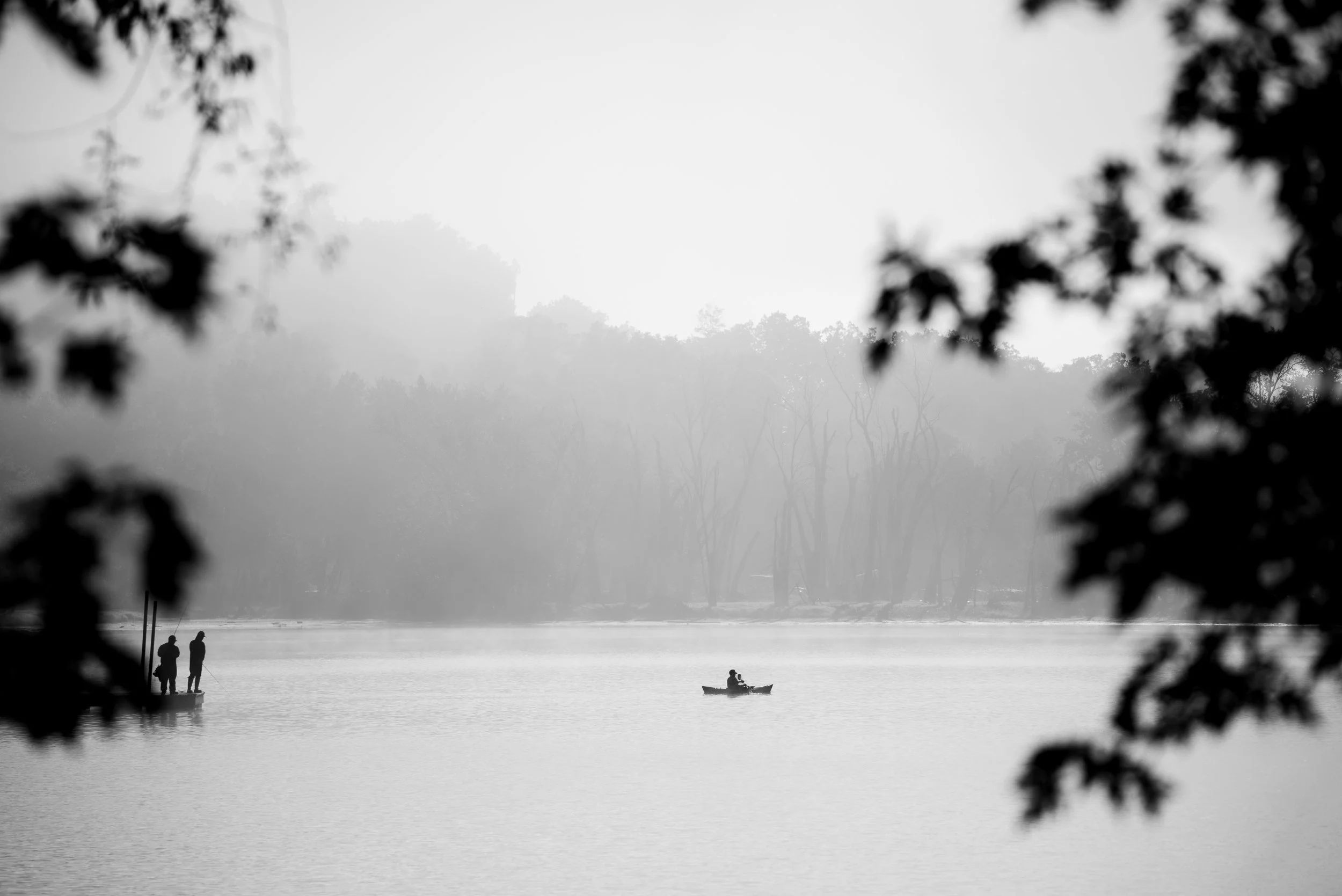
Truth and beauty emanate from “inclement weather,” where obstruction of the self-evident becomes intentional and expressive. Often in artmaking, there are nodal points at which statements are received; moments after which a once-in-a-generation artist is heard in concert, or one leaves a museum in deafening silence. It is in these nodal moments that one is left completely limp. In some works of art, it is the obstruction of absolute clarity that emerges as its most salient communicative essence; through visual haze, or varying gradations of phrasal coloratura. This is where the decision of the artist is to tastefully obstruct the written page, should it serve its thesis. In periods where clarity is looked upon admirably, it may come down to the inflection of timing, while in others, it may reside in the choices to blur certain textures. Humans emote via two primary modes: the songful and syllabic - often in tandem. In the early Germanic repertoire, it is the punctuation of sentential moments that provides their heft. In romantic works, it is the coloration of sustain and the interjection of the ego that emboldens meaning. In the impressionist musical works, it is the unbridled natural atmosphere devoid of man’s presence that dominates the communicative landscape. What I have discovered in my time with music is that while all of these mechanisms may vary in their modus operandi, they ultimately spellbind in similar ways.
Half the battle of playing the piano is reaching a point where the infinity of worldly sounds can be produced - none of which should be of the instrument itself. I first truly “heard” Schumann’s Op. 17 in San Francisco at Alamo Square. Karl the Fog was rolling overhead, and these were the ideal conditions to realize this masterpiece for later study. This work served as a vehicle to realize many further things - what music is and can be. My friends from high school nicknamed me the weatherman. It took time, but in due course this title became one that I wore facetiously. My observations were never about the meteorology, but the “weather” that brought forth the boundless palette of human emotions of every season and its vesture.
In an era saturated with clinical perfection, we quarrel with a certain sterility. From the intrusion of artificial intelligence into photography to self-professed and non-exclusive musical success timelines, the contemporary landscape suffers from a singular ailment: it has been scrubbed clean of its humanity and honesty. Our musical institutions, especially those shy of higher education, have attempted to disembowel art, repackaging it as a predictable commodity. Every pupil is driven by different catalysts, and it is the teacher who must adapt in order to provide the highest chances of success. This teacher’s duty is all-encompassing and must never undermine the so-called drudgery required to reach such a point; rather, it is to present it as a noble quest.
In a culture and economic framework that mistake uniform optimization for success, we systematically discard the very elements that make innate human expression so vital. The tragedy of these structures is that young students, and all too often the “pedagogues” working under their auspices, fail to grasp the gravity of how these systems are not teaching a craft, but promoting a certain handi-cap on learning. From money, and the ostentatious businessman who knows of its alluring toxicity, comes deceit, where the parent is hopeful, yet ignorant. Alas -
True artistry exists only because of a sensitive proclivity innately expressed by nature. For a child, healthy technique cannot be mandated outright, but only developed through time. Technique tends to blossom when a sense of wonder and a genuine love for the sound are first inculcated - this serves as groundwork for a pupil in years forthcoming. A good teacher who has known these truisms will not burden a student with their abstractions, but present the information in a way that the pupil can digest. This said, a teacher must be able to play and think at a high level, for without it, their blindness is their most hubristic lead. This impervious insurance model of music “education” (business venture) might function on the printed page, but such is the irony that the party most hurt from these patterns is first and foremost the student at the bench.
Human life is felt through the blurred edges of our deepest emotions - through the moments of transition. The sweeping grief of a breakup, the sudden gravity of a career shift, or one’s health are never defined by the decisive moments alone. These undulations are identifiable in time, though their actual effects tend to perpetually saturate the periphery long thereafter. Any photographer worth their salt will tell you that detail is pervasive in the grain and the mysteries within the shadows. In music, if every single note is enunciated with a blinding luminosity, accompanied by extraneous motions engineered for none other than vapid showmanship* and parental awe, the plot is lost. Imagine a world where teachers with advanced degrees in this field are “trained” to promote extraneous motions for bravado*… I fear; I do not imagine.
The human spirit is meant to wander, and wander it must. Wandering does not overtly seek, but finds its destination with proper guidance. To wander is a gift; few are born, let alone confide in and maintain this through their life. The soul must come first; thereafter, the teacher may guide. If one exists merely within a construct - a curriculum (currere, “to run,” tethered to -culum, “the track”) - they wander eternally on a manufactured racecourse that offers very little. To teach well is to tame the beast, the wild stallion, but the inverse is not equally true… Apologies, this offers very much: the student’s fallout from monetary greed… All people are born pure, some with tremendous gifts, but it is the acting world that chooses for that individual what might happen…
Artmaking is the eternal, delicate interplay between physical instrumental limitations and the limitless pursuit of sound. In artmaking, beauty might also be un-beautiful… As we must choose in life when to adopt a certain posture, we must also recognize the profound moments that require us to blur the edges and leave things unsaid. What is unspoken rarely goes unheard. In this world, truth often cloaks itself, but by Mother Nature, it shall never fall silent, for silence is the loudest thing of all.
Pardon my triteness:
"The music is not in the notes, but in the silence between.”
-W.A.M.
Truth heals even those most broken by pervasive deceit, for in its presence, and with real thought, we are free.
J.W.M.
-
In the contemporary world, it seems that much of art is realized via a particular malaise - right to left, and upside down. The culture seeks to identify first the monetary value of the artist, instead of seeing their work as an extension of something larger and beyond this life. If one cannot bring some type of monetary value, they are not looked upon favorably. I feel it is a delightful thought experiment to at least question the reason as to why people create beautiful things. Why are we driven to create? Why are we innately drawn to beautiful things?
The origin of creative passion in many artists is a necessity and exists independently of external acknowledgement. This artist’s mission is to create beauty for the sake of beauty; beauty, the undefinable. To myself, I find that often, no matter the terms, I am drawn to create - be it through writing, photographs, or music. In various ways throughout my life, I have continually been reminded that the artist who is not actively creating is existing in their most undesirable state. A dear friend of mine brought these matters to my attention today, giving me the desire to parse out some ideas and, in doing so, more likely than not, leave behind more questions than answers.
The idea of inwardness is often discussed in classical music making. This is where an artist expresses their deepest emotions in the most intensely felt manner, but in a way that does not make their position overly clangorous. This inwardness reflects a state of expression that is laconic in nature, but the intensity of expression is never lessened by a crass attempt to remain stoic. If nothing else, the imbued expression in these “inward” works screams louder and with more vitality than any work of pure showmanship. This being said, our souls do not always, but can spill over… Through art, we profess and find purpose in sharing. When the inner world is just beaming, we are inclined to share our work for no reason other than this.
This spilling over must never become an exercise of the ego - it must be drawn from a pure place. It must never be a deliberate subterfuge of the ego itself. While an artist may find immense personal joy in sharing their hard work, art serves as an independent entity and beautiful attribute of the artist, the conduit of something above all else. The mortal mind may hijack these feelings for validation, and it may become habitual; it is only natural, especially in the young. The distinction here is that these feelings emanate from the radiant inner world of expression. In a case of love, two people cultivate a bond that defies description and share it openly in hopes that others might glimpse this quiet radiance. This brings attention to another point often iterated at my alma mater. A great humanities professor spoke not just about how people are naturally inclined to appreciate and create beautiful things, but how we are naturally drawn to share beauty with others when we see it before our very eyes. Why, upon a great vista, must we take a photo? Why must we turn to our travel companion and ask them if they do in fact see what we do? It is because we are beside ourselves with something we cannot explain. Or, at least, we hope that perhaps our neighbor that we love may see things as we do. These scenes and moments in life touch a part of each of us so deeply. We feel so fervently, but cannot describe why.
The ego is permissible only so that one’s artistic reality may be conveyed as purely as possible in the face of public scrutiny. As soon as the ego grows large enough to disturb the message of the art itself, the art loses much of what it hides. The ego can protect and so equally can it destroy and often, very maliciously, and in radio silence. A photographer finds peace and refuge behind his camera’s viewfinder, and a musician finds it in their interpretation after many hours of contemplation. Both of these arrivals are parsed in solitude, under safe spaces, where thoughts can wander, and convictions can be formed. It is then and only then that an artist can come forth and share something they hold as truth.
The matter of religiosity comes to the fore. While formal religion can be viewed through stigmatic lenses, it is only after the stripping away of these stigmas that the truth attached to denominational religion seems to fizzle. We see what is left behind: raw virtue and truth. Perhaps this is what people mean when they self-identify as “spiritual.” Chief among this framework is the act of devotion. We devote and sacrifice our love to another; we give a part of ourselves. In this talk of art and religion, we must of course mention J.S. Bach, the man from whom all further art was realized. Bach was able to achieve earth-shattering wonder precisely because his devotion gave him an unshakeable point of execution. This man held dear the most real things to him and, by doing so, created music that is as timeless as it is. I have always heard the works of Bach as something beyond the definable in this life, even as a child, and it is for this reason that I concur that there must be some absolutely undefinable intention and truth in his music that is intrinsically felt - the muse from which it was written - that makes these otherwise latent qualities so precisely etched.
One may draw into question (and many classical musicians do ask this): why do we speak of these great composers as deity-like figures? I can say that I do. My most beloved teacher and her husband spoke about the “Gods of Classical Music.” Every time I would hear this from her, I would immediately know the weight and responsibility I carried on my shoulders as an artist. The material with which we grapple is holy, pure, and must be treated with the utmost respect. Every time you sit to practice, you must hold the highest reverence for what it is you are attempting to interpret. Bach saw “God,” his truth, and irrespective of faith, we can feel this unbreakable strength in his music. It absolutely transcends religion. Religion is a human creation, as we call a table a table.
This reverence is what separates true stewardship from validation. There is an immense artistic transformation that unfolds in a person when the focus shifts from self-glory to simply serving as a vessel. By acknowledging an undefinable muse completely beyond the self, whether one calls it God or a nameless item, the ego dissolves. To create, and have the burning desire to do so constantly, may take an earthbound toll in an otherwise tainted life, but what a life it would be without such things. And of course, to let in that which is tainted is to give these things power. If a tree falls in a forest?
If artists accept that the material with which we grapple is holy, then the act of bringing it to life requires an ongoing vulnerability. The leap of faith is not a choice, but an acceptance of a lifelong pursuit. This is why the greatest teachers in this practice do not “retire.” Art is the essence of our entire existence, and it breathes meaning into everything we do.
In a culture hugely crippled by narcissistic greed, by “worshipping” the greats, we protect our only remaining anchor to the sublime. As trite as it may sound, every human being possesses the ability to make a choice - the choice to look within and choose their source of purpose. Some fall victim to the ego and mortal mind and live that out for their bodily days. Truths are incredibly difficult to accept, especially when you believe or are conditioned into something so fervently, but may it stand eternally true these words: we are born as children and die as children. Every amassed asset is a farce, and it will be left behind just as invisible as it was when you were born. We are born integrated, we disintegrate, and we have to reintegrate. How does one play the game without entirely losing themselves? Perhaps an impossibility.
With art, music, and truth. That is our Bible, and this Bible has no terms.
—
There are no facts, only interpretations.
- Friedrich Nietzsche, Notebooks
Truth is not to be found outside. No teacher, no scripture can give it to you. It is ongoing within you, and if you wish to find it, you must seek it within yourself.
- Søren Kierkegaard
We swallow greedily any lie that flatters us, but we sip only a little at a time at a truth we find bitter.
- Denis Diderot
The only truth which matters is the truth which is lived and felt inside the soul; all else is mere words, a net to catch the wind.
- Alan Watts
Do not look for truth outside yourself; it is only found within the quiet radiance of your own inner world.
- Augustine of Hippo